
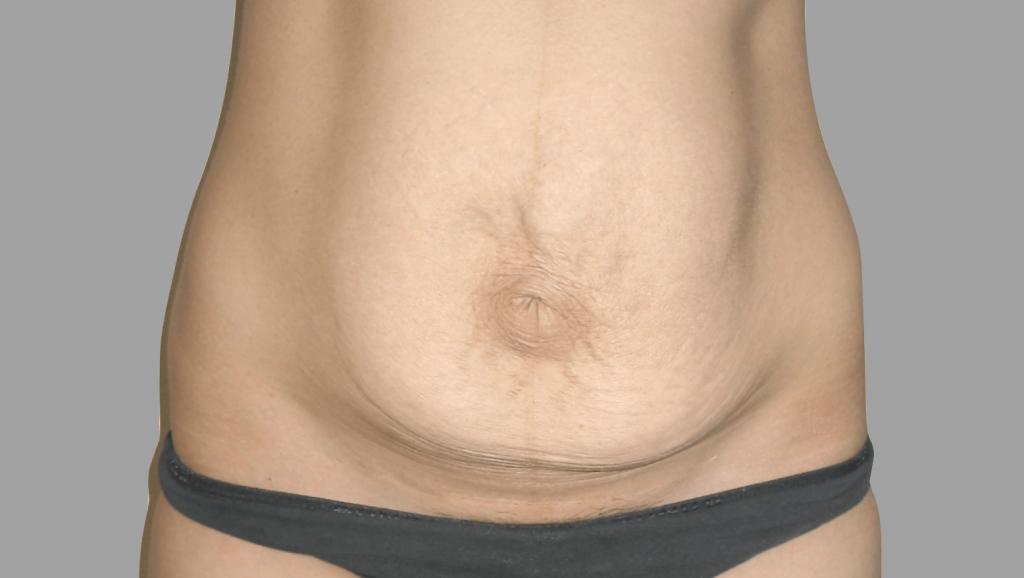
Is tummy tuck surgery right for me?
One of the main reasons why women want a tummy tuck is that they feel they look pregnant, they have no core support to their abdomen, so they feel they’ve always got a bit of a bulge that they can’t easily control and they often have excess skin. And in general it just makes them [...]What is a full abdominoplasty?
A full tummy tuck usually involves removal of a large ellipse of skin below the umbilicus, leaving a neat scar in the bikini line, and then when we’ve removed that we stitch the muscles back together which flattens off the abdominal wall and gives a nice, flat, solid tummy again, that the women don’t have [...]What is a mini-abdominoplasty?
There are a range of different types of tummy tuck that are available. Most patients, actually, are suitable for a full tummy tuck, but if someone hasn’t got a lot of excess skin, often what they’ll have is just a little roll of skin in their lower abdomen, but actually the rest of their abdomen [...]What is the recovery like after a tummy tuck?
I usually ask patients to spend at least a week at home after the surgery, taking it easy, not really moving around the house too much, not going out too much. After about a week to ten days they might want to go out, visit some friends, go shopping, but you wouldn’t be carrying heavy [...]What are the disadvantages of a tummy tuck?
The potential downsides of a tummy tuck are that there’s a large scar, it runs from hipbone to hipbone, right across the bikini line. Some women are not really prepared to accept the scar, in most patients it fades, but it never disappears, it’s always there. Also, the skin on the abdomen is detached from [...]What are the risks in an abdominoplasty?
The risks of tummy tuck are pretty much the same as any operation; so there are the anaesthetic risks, which are relatively minor. Specific to the surgery you can get bleeding under the skin following surgery and that can occasionally require a trip back to theatre to undo the sutures, stop the bleeding and re-suture [...]Am I suitable for Tummy Tuck Surgery?
The main group of patients that require a tummy tuck are women who’ve had children. The effect of pregnancy causes usually three different things. It causes separation of the rectus muscles, which are the six-pack muscles that run either side of the tummy button, causes separation of those muscles which gives a sort of central [...]Can I have Liposuction and Tummy Tuck Surgery?
Yes, liposuction as a technique is very often used in combination with other surgery. I often use it with a tummy tuck. With the tummy tuck you remove the excess skin, but sometimes you realise then that there is a bulgier fat on the waistline that upsets the end results, so we’ll often use liposuction [...]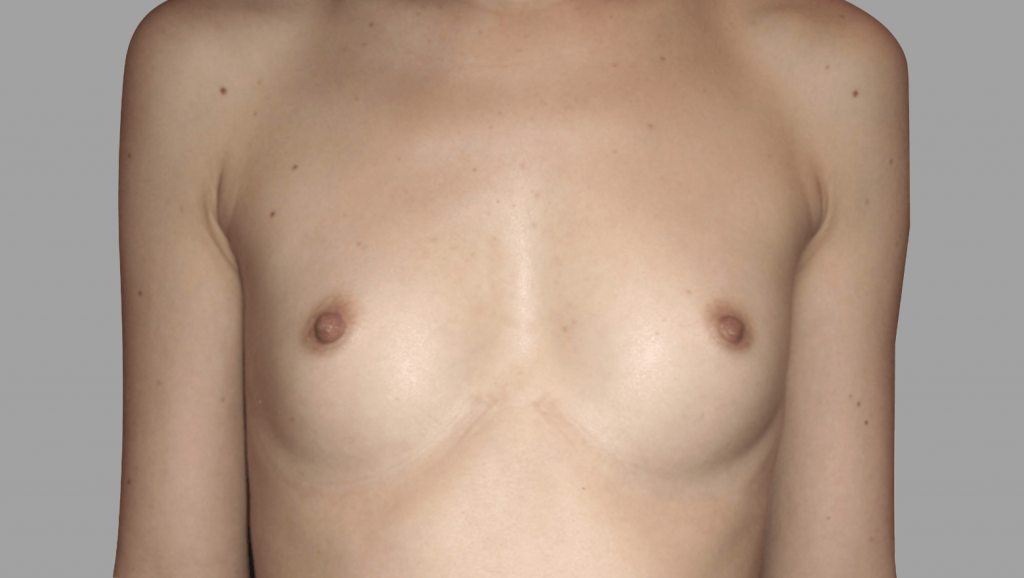
What happens during a breast enlargement?
Breast augmentation is an operation that happens under general anaesthetic. Usually patients will come into hospital on the morning of surgery, having nothing to eat or drink the night before, they’ll meet the anaesthetist, who’ll discuss the anaesthetic with them. They’ll already have their preoperative assessment by the plastic surgery nurse usually and then they’ll [...]Which type of breast enlargement is right for me?
There are a variety of options available for breast enlargement. The most common is to use breast implants. We’ve been using breast implants for the last forty years, and they’ve mostly been silicone type of implant. It’s a bag of silicone, covered by a silicone elastomer that has a cohesive gel silicone on the inside [...]What happens during a breast enlargement?
More procedures Breast surgery videos Make an appointment Clinics and HospitalsWhat are the risks in Breast Augmentation?
It’s important to realise that breast augmentation is actually a full operation. It’s requires a general anaesthetic, it involves incisions through the skin, creation of pockets for the implant, and all of these come with their own set of potential risks and complications. There are risks of just general anaesthetic as well, which relate to [...]Is a breast enlargement right for me?
The most common presentation for breast augmentation is the young 18 year old girl, or 17 year old girl, who’s hoping that her breasts would develop a bit more but they haven’t and she feels that they’re disproportionate with the rest of her body and would like to have breast implants to resolve that. And [...]What aftercare is required after a breast enlargement procedure?
Usually the patient will go home the day after surgery. In my practice we’ll take the drains out the next day and the patient will be discharged home, and I expect the patient to be quite slowed down that week. I usually recommend a full week off, so a week to ten days, and that [...]What is capsular contracture?
So because the breast implant is plastic and it’s recognised as a foreign body by the patient, the body makes a scar capsule around the implant, and that’s a natural way that the body identifies it as separate from itself and it controls the position of the implant very nicely. But in a small group [...]Can you breast feed after a breast enlargement?
Because the implant goes underneath the breast tissue, or underneath the pectoralis muscle, it doesn’t disturb the milk production by the breast. It doesn’t affect the breast ducts, it doesn’t actually affect the gland of the breast tissue. So there’s no real impact on breastfeeding at all. All patients are able to breast feed just [...]Can I get a Breast Enlargement on the NHS?
One question I’m often asked is whether patients can get breast augmentation on the NHS. It used to be available for patients with absolutely no breast development, but it is now been removed from the list of available procedures. The only time we would use breast implants on the NHS is for patients with breast [...]Do the results of Fat Transfer Breast Enlargement Last?
The problem is that not all the fat you inject survives, so probably 50-70 percent of the fat that you put in picks up a blood supply and becomes permanent fat within your breast, and then that is permanent. The remaining 30-50 percent will often dissolve away, so it can be a little disappointing in [...]