
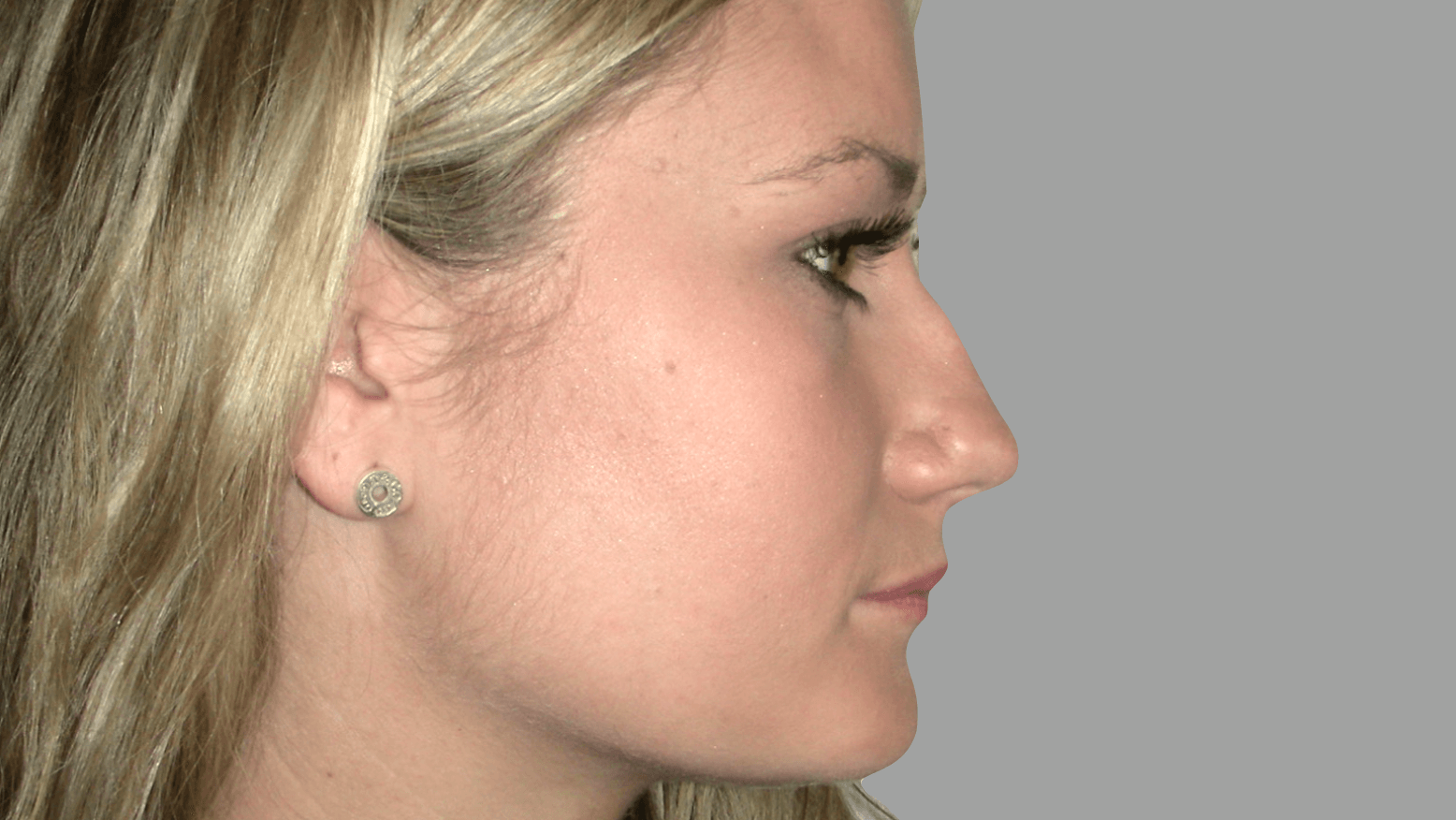
I have a special interest in rhinoplasty and have been doing lots of rhinoplasty for the last 10 or 12 years. It has given me the chance to kind of evolve the way I deal with patients, and the way I prepare both, myself and the patient for the surgery. Most patients who want rhinoplasty have very specific things they dislike about their nose and it is very important for me to take those on board, document them carefully, and understand those problems. It is usually a combination of a hump on the bridge line, the nose sticks out too much, the tip is too big, or there is an asymmetry, like it’s shifted to one side. When I have been through those concerns with the patient I then take some careful measurements, I measure the dimensions, the length of the nose, the projection, I look at the symmetry, I feel carefully along the bridge line and I feel the cartilage in the tip of the nose. Many of these things can be adjusted with rhinoplasty, and as a rhinoplasty surgeon my main objective is to work out exactly what I need to do in the operation to get the result both the patient and I are looking for.
One of the interesting developments that I have used in the last few years, which has helped me a lot, is to use morphed images on a computer because I can take a profile shot, so a lateral shot to show the shape of the nose, and on a computer I can remodel the nose to show how it could look after surgery. Now you have to be careful, because it doesn’t guarantee that that is how your nose will look when you’ve had the operation, but what it does do is it allows me to show the patient the kind of nose I am picturing in my head when I’m doing the surgery. Because, it is like 3 dimensional modeling, rhinoplasty. I go into the operation with a picture in my mind of the nose I am going to build, and if I can show that to the patient preoperatively using this modeling imaging software then they can sort of see where I am coming from and I find it really useful because sometimes the nose I think is perfect, the patient says no, no that’s not what I want, and actually it allows us to explore that. Sometimes when the patient thinks their nose is too big I can show them with the pictures that it’s not too big, it’s just the wrong shape, so it’s a really useful modeling tool I find, and I haven’t had any concerns from patients about using that technique or technology, in general I find it very helpful.